Temple of Heaven travel guide · 山河志 Shan He Zhi
Why the Temple of Heaven is round (heaven, earth, and harvest)
Temple of Heaven in Beijing: Blue roofs, circular altars, and the emperor’s role as a ritual farmer-in-chief.
天坛为何是圆的(天、地与收成)
蓝顶、圆坛,以及皇帝作为“首席农事祭祀者”的角色。
Round for heaven
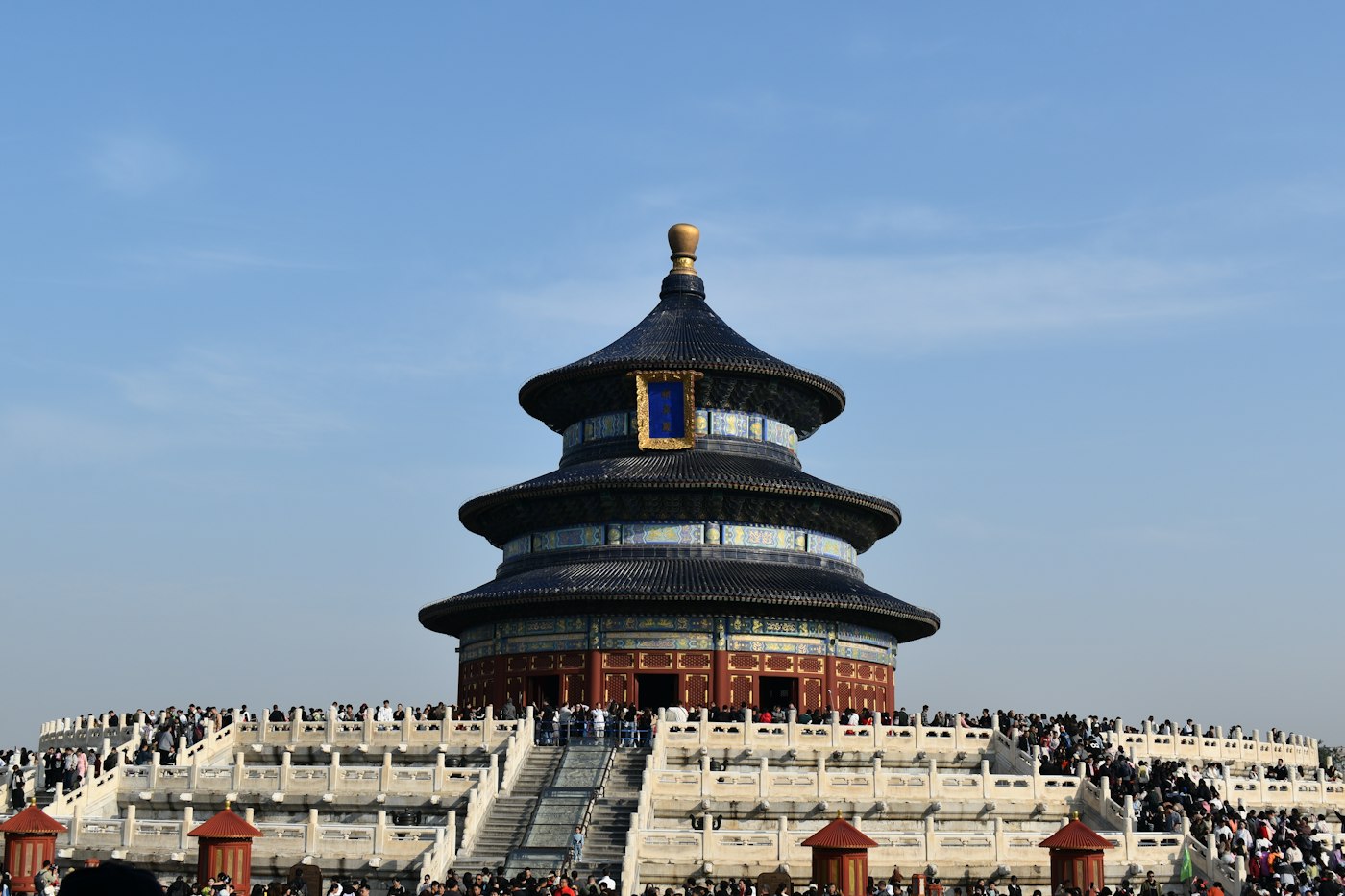
In traditional cosmology, heaven was imagined as round and earth as square. The Temple of Heaven leans into circles—mounds, vaults, and the famous Hall of Prayer—so the architecture itself repeats the metaphor.
You’re not visiting a monastery. You’re walking a stage where the emperor reported to heaven about the harvest.
圆以象天
传统宇宙观里,天圆地方。天坛大量用圆——圜丘、皇穹宇、祈年殿——建筑本身在重复这个比喻。
这不是寺院,而是皇帝向天汇报收成的礼仪舞台。
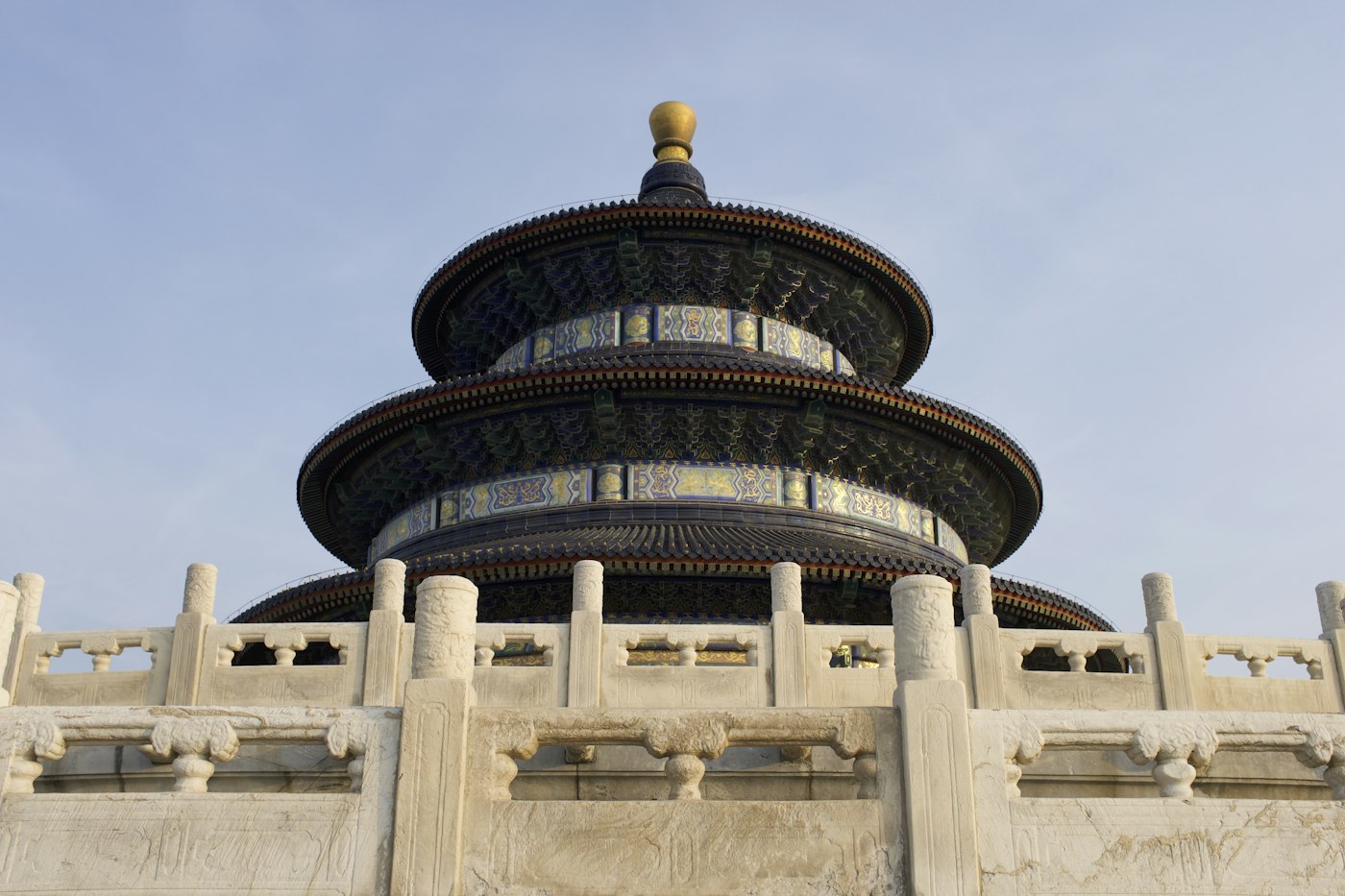
Blue and the harvest prayer
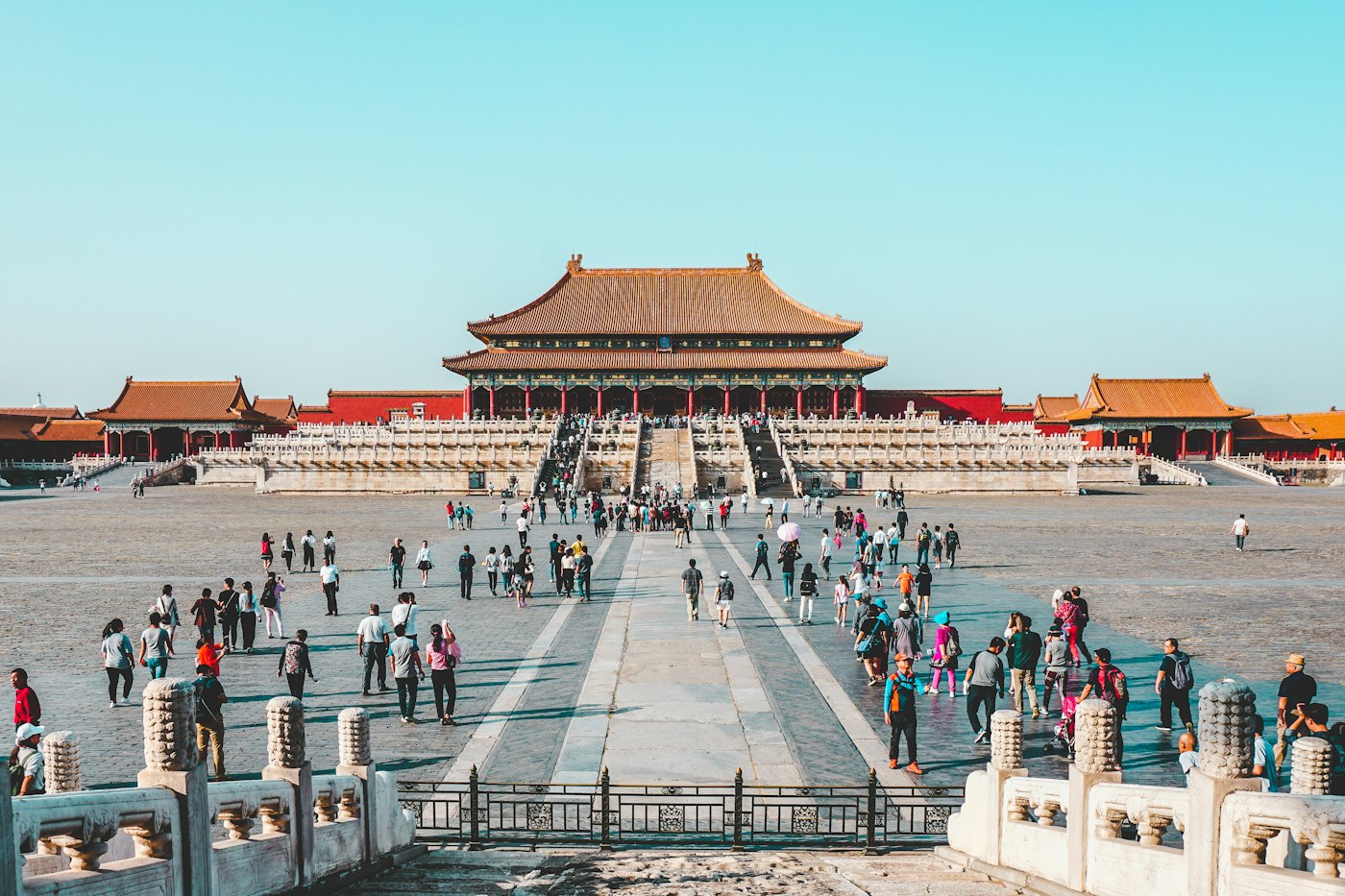
Blue glazed tiles point upward—toward sky—more than the imperial yellow you see in the Forbidden City. The Hall of Prayer for Good Harvests was about grain and survival, not court fashion.
Numbers on balustrades and steps often encode ritual calendars. You don’t need to count every post; noticing that “design is theology” is enough.
蓝色与祈谷
蓝琉璃更指向天空,不像故宫那样铺开皇家黄。祈年殿关乎粮食与存活,不是宫廷风尚。
栏杆台阶的数字常藏历法。不必根根数完;感到“设计即礼仪”就够。
What to notice quietly
The Echo Wall stories are tourist folklore mixed with real acoustics—enjoy them lightly. More striking is how empty space works: wide avenues that make one person look small on purpose.
If you only keep one idea: this park was built so hierarchy could speak to the sky—and Beijing residents later turned the outer grounds into everyday leisure.
安静时看什么
回音壁传说夹杂声学事实,听听即可。更打动人的是留白:大道刻意让人显得很小。
只记一点:这里曾让权力对天空说话;后来外缘草地,成了北京人日常散步的地方。